Raft® Survival - Ocean Nomad
Survival Games LtdSimulation
4.329.21K Reviews
- Version
- 2.9.4
- Installs
- 100.00M
- Age Rating
- Everyone 10+
Screenshots
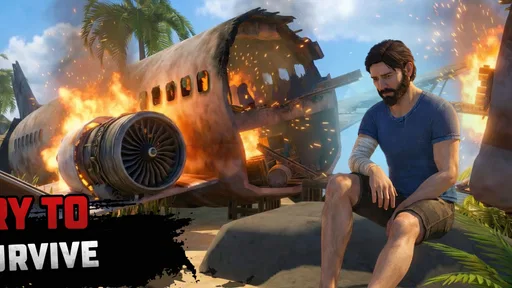
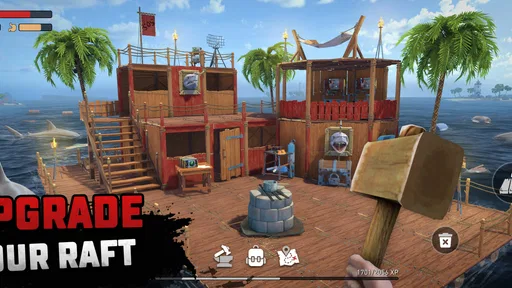
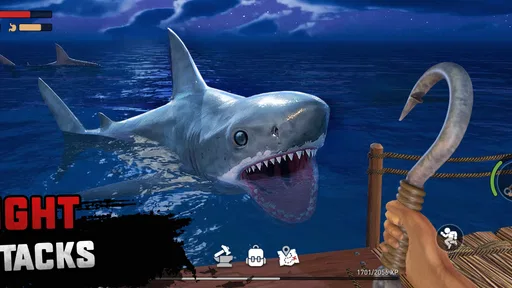
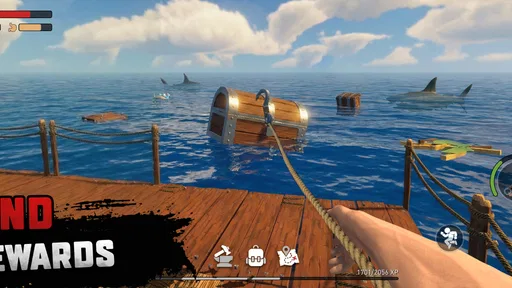
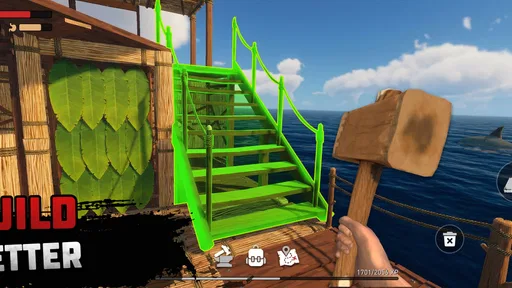
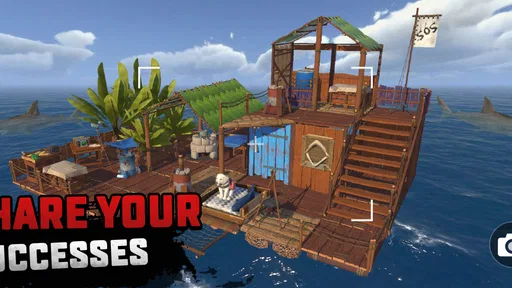
Our Review of Raft® Survival - Ocean Nomad
 Analysis by Appyee
I tried Raft® Survival - Ocean Nomad as the kind of game I could pick up for a short break and return to when I had more time. Its ocean setting makes the basic loop easy to understand: gather what floats by, keep yourself alive, and turn a small raft into something more capable. The appeal is less about rushing to a finish and more about making steady choices while the water and its hazards keep you occupied.
A shared screen, but a personal survival run
On a shared phone or tablet, this can be an easy game to take turns with. One person can steer the next stretch of play by choosing what to craft, while another can suggest which supplies to prioritize. That works best as informal cooperation rather than a claim that the game has household or multiplayer tools: each player can simply take a turn and hand the device back.
A practical routine is to agree on a small goal before passing the device over: collect materials for a tool, improve the raft, or make sure basic needs are covered. It gives a short session a clear purpose and makes it easier for the next person to pick up the same run without debating every decision. I would avoid letting several people make rapid changes at once; survival choices are easier to follow when one player handles the controls at a time.
Set expectations before handing over the device
The opening tutorial helps a new player learn the hook, inventory, and crafting basics, so I would let a first-time user play through that part rather than trying to explain every mechanic in advance. Afterward, a useful boundary is to keep early turns focused on gathering and basic survival, then let the player decide whether to spend resources on expansion. That keeps the raft’s development understandable instead of turning a shared run into a sequence of unexplained changes.
Because progress involves collecting and using materials, it is sensible to agree that nobody should spend scarce supplies casually when another person is taking a turn next. This is not a special in-game household setting; it is just a simple way to make shared-device play less frustrating. If separate people want independent choices and progress, I would treat that as a reason to use separate play arrangements rather than assuming one shared run will suit everyone.
Coordinating choices without turning play into a chore
The most useful coordination is deciding what matters now. When the raft is under pressure, food and water take priority; when those needs are under control, gathering materials for tools or a larger platform feels more rewarding. I like that this creates natural conversation around trade-offs instead of requiring a formal plan. A younger or less experienced player can focus on collecting debris while a more practiced player explains why a particular resource is useful.
For an everyday session, imagine a family member waiting for a ride or taking a quiet break at home. They can gather a few floating supplies and make one manageable improvement, then stop at a moment when the raft is stable enough for someone else to continue. That is a better fit than starting a long session with no time to spare: resource gathering and survival needs make it easy to want one more action.
Age, spending, and trust
The game is rated Everyone 10+, which gives families a useful starting point when deciding whether its survival pressure and shark threats suit a particular player. I would still consider the individual child’s comfort with danger and resource-management pressure instead of treating an age label as a complete judgment. Playing nearby for the first session is a simple way to see whether the tense moments feel exciting or unpleasant to them.
It is free to start, with in-app purchases listed from $0.49 to $129.99 per item. For a shared device, I would make the spending boundary clear before handing it over and have the account holder handle any purchase decisions. That is especially helpful when a child is playing: an enjoyable crafting loop can make it tempting to seek shortcuts, but nobody needs to make a purchase to understand the game’s basic survival premise.
Survival Games Ltd developed this simulation game. It was released on July 27, 2018, and version 2.9.2 requires Android 7.0 or later. It has an average rating of 4.3 from around 1.2 million ratings, with about 29,000 written reviews and over 100 million installs. Those figures show that it has reached a large audience, but I would still judge it by whether its deliberate resource loop suits the person holding the device.
Setting Sail: First Impressions
From the moment you launch Raft® Survival - Ocean Nomad, you’re thrown into a vast, open ocean with nothing but a small raft and a hook. It’s a classic survival setup, and immediately, I felt the urge to start crafting and exploring. The graphics are vibrant, and the ocean feels alive with its gentle waves and occasional wildlife. There’s something oddly calming about the whole ambiance, despite the looming threat of survival.
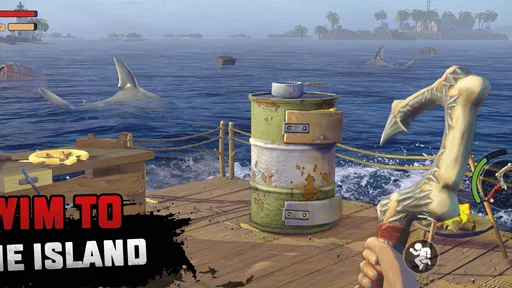
The controls are intuitive, especially if you’re familiar with the survival genre. The game starts with a short tutorial that gets you up to speed with the mechanics—how to use your hook to fish for items, manage your inventory, and begin crafting. It’s straightforward and doesn’t bog you down with too much detail, which I appreciated. I was eager to get started and see what I could build in this watery world.
Crafting Your Way to Survival
The heart of the game lies in crafting. With the ocean as your playground, you’ll find yourself constantly fishing for debris—wood, plastic, and other materials—that float by. These resources are crucial, as they allow you to expand your raft and create tools and weapons. The crafting menu is user-friendly, with a clear progression path that keeps you hooked. There’s always something new to build or upgrade, which keeps the gameplay fresh and engaging.
One of the things I love about it is how it encourages creativity. You’re not just building to survive; you’re building to thrive. Want to add a second story to your raft? Go for it. Need to plant crops and harvest your food? You can do that too. The possibilities are vast, and watching your humble raft transform into a floating fortress is immensely satisfying.
Surviving the Elements
Survival is not just about crafting, though. You’ll need to manage your hunger, thirst, and health to stay alive. This means finding ways to purify water, catch fish, and cook meals. The game does a great job of balancing these elements, so you’re always kept on your toes without feeling overwhelmed. It’s a delicate dance between exploration and ensuring you have enough supplies to last another day.
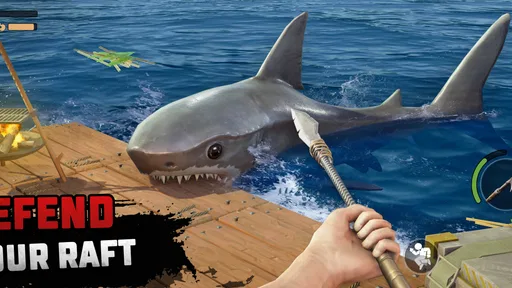
And let’s not forget about the sharks. These menacing creatures are a constant threat, circling your raft and waiting for an opportunity to strike. It adds an element of danger that keeps you vigilant. You’ll need to craft weapons and defenses to keep them at bay, adding another layer to your survival strategy.
Exploring the Unknown
As you expand your raft and gather resources, you’ll unlock the ability to explore islands and shipwrecks. These locations are treasure troves of resources and adventure. Landing on an island for the first time was exhilarating, offering a change of scenery and new challenges. It’s in these moments that the game truly shines, rewarding your efforts with new materials and discoveries.
Exploration also brings unpredictability. You never quite know what you’ll find, which keeps the game exciting. Whether it’s a rare material or a hidden threat, there’s always an element of surprise waiting for you.
Who will enjoy this particular rhythm?
I would recommend this to someone who likes building gradually and making small decisions that add up. It suits a player who enjoys checking needs, gathering resources, and deciding whether the next material should go toward survival or a more ambitious raft. The ocean gives those routines a clear setting, and the changing priorities stop every moment from feeling like simple decoration.
It is less suitable for someone who wants a quick, self-contained challenge with a definite finish, or who dislikes monitoring several needs while dealing with threats. Players who prefer direct action may find the gathering stretches slow. Likewise, if the shark pressure makes survival games stressful rather than fun, the calmer look of the sea should not be mistaken for a wholly peaceful experience.
How it compares with other survival games
Compared with survival games built around large land maps, this one keeps attention close to the raft and the water around it. That makes the basic objective easier to grasp: collect passing debris, use it to improve your floating base, and venture out when you are ready. I find that tighter focus appealing on a phone, because it gives each session a visible thread instead of asking me to roam a huge landscape in search of direction.
The trade-off is that the repeated work of collecting materials and managing needs is central, not incidental. If you prefer a story-led adventure or a fast combat game, another option will probably suit you better. If you enjoy watching a modest base grow through careful resource choices, the raft provides a satisfying project. A useful tip is to treat expansion as a reward for stability: secure essentials first, then invest in a larger build, rather than spending everything on a dramatic upgrade and leaving basic needs unattended.
Small decisions that make a run smoother
I found it helpful to think in terms of a short priority order rather than trying to craft whatever looks interesting. First check whether hunger, thirst, and health need attention; next consider tools or defenses that protect the run; only then use spare resources on broadening the raft. That mental checklist makes the crafting menu feel less like a long wish list and more like a set of choices with consequences.
There is also a useful distinction between a session devoted to collecting and one devoted to exploring. If supplies are running low, roaming toward an island or shipwreck can be a poor distraction from the immediate problem. When the raft is in a better state, exploration feels more rewarding because the trip is a deliberate change of pace rather than a gamble made out of impatience. I would stop after a clear task is complete, especially when sharing a device, so the next player inherits a readable situation.
One limitation is that the game’s survival loop asks for attention even when I only planned to play briefly. A few minutes can turn into a string of small chores: gather, craft, check needs, and respond to danger. That can be absorbing, but it is not ideal when I need a game I can abandon at any instant without caring about the state I leave behind. I also would not recommend it as a substitute for a calm creative builder; threats and resource pressure are part of the appeal, not optional background decoration.
A household verdict
For a household with one shared screen, I see this as a good turn-taking game when everyone agrees on a simple approach to supplies and purchases. The tutorial lowers the barrier for newcomers, while raft-building gives returning players a visible project to continue. It can work well during a relaxed evening when there is time to talk through choices, but it is a weaker fit for a household looking for independent profiles, guaranteed separate runs, or a game that keeps every player busy at once.
My overall view is positive, with a clear caveat: its best moments come from patience and planning, not constant novelty. If that sounds enjoyable, the free entry point makes it easy to see whether the loop clicks for you. If you want a tightly paced action game, a story-first adventure, or a session that demands no ongoing attention, I would choose something else. For players who want to make a small raft feel like a hard-won home on the water, it offers a distinctive and rewarding survival routine.
Verdict
Strengths of Raft® Survival - Ocean Nomad
- Engaging survival mechanics.
- Expansive ocean exploration.
- Regular updates with new content.
- Intuitive crafting system.
- Challenging shark encounters.
Limitations of Raft® Survival - Ocean Nomad
- Can be repetitive over time.
- Ads can be intrusive.
- Occasional performance lags.
- Limited offline play options.
- Resource gathering can be tedious.
Similar Picks in This Category
View All
Truckers of Europe 3
Wanda Software4.3

Town Building Life Simulator
XGame Global4.2

Fidget Toys Trading・Pop It 3D
Freeplay Inc4.7

Sculpt People
CrazyLabs LTD4.4

Scary Teacher 3D
Z & K Games4.2

Hair Tattoo: Barber Shop Game
CASUAL AZUR GAMES4.3
Frequently Asked Questions
What is the main objective of Raft® Survival - Ocean Nomad?
In Raft® Survival - Ocean Nomad, the primary goal is to survive on a raft amidst the ocean. Players must gather resources, craft tools, and fend off threats such as sharks while expanding their raft. The game combines elements of exploration, crafting, and strategic planning to ensure survival in a vast, open-world ocean environment.
Can Raft® Survival - Ocean Nomad be played offline?
Yes, Raft® Survival - Ocean Nomad can be played offline. This is beneficial for users who may not have consistent internet access or prefer to play without connectivity. However, some features, like certain updates or online leaderboards, may require an internet connection to function properly.
How does crafting work in Raft® Survival - Ocean Nomad?
Crafting in Raft® Survival - Ocean Nomad involves collecting various materials floating in the ocean or obtained from islands. Players use these materials to build and upgrade their raft, create tools, and produce weapons. The crafting system is intuitive, allowing players to easily manage resources to ensure their survival and enhance their gameplay experience.
Are there any in-game purchases in Raft® Survival - Ocean Nomad?
Yes, Raft® Survival - Ocean Nomad offers in-game purchases. Players can buy items to enhance their experience, such as resources or special tools. While the game is free to download and play, these optional purchases can provide a boost or convenience in gameplay, but are not necessary to enjoy the full experience.
What platforms is Raft® Survival - Ocean Nomad available on?
Raft® Survival - Ocean Nomad is available on both Android and iOS platforms. Players can download the game from the Google Play Store for Android devices and the Apple App Store for iOS devices. This cross-platform availability ensures that a wide range of users can access and enjoy the game on their preferred devices.
Play our best games!


